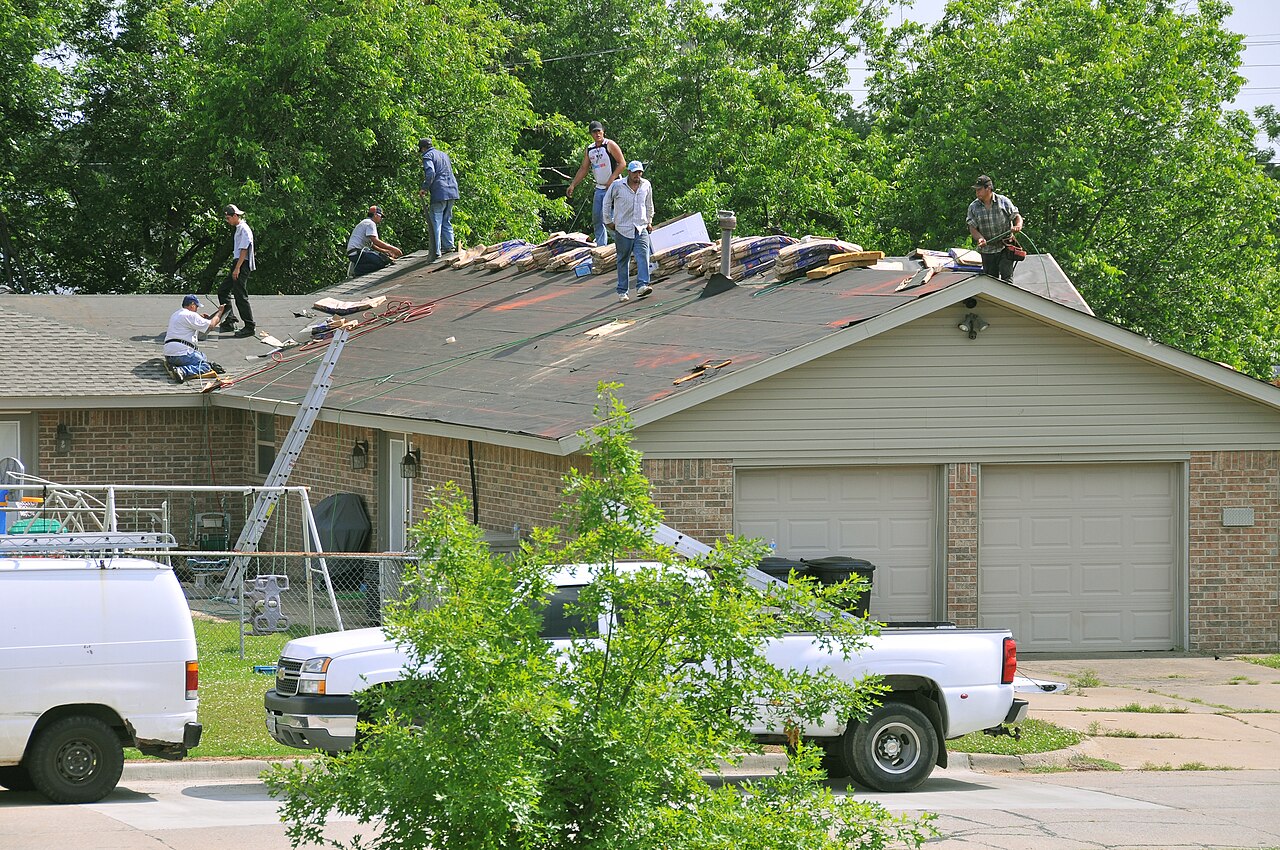
The hail hasn’t finished melting in the yard before the first truck rolls slowly down the street. By dinnertime there’s a business card in the door, a “free roof inspection” offer, and a friendly guy who says he’s already doing three houses on the block and can squeeze you in, if you sign today. In North Texas, where hail is practically a season, this scene repeats every year. Sometimes that guy is a legitimate local roofer hustling honest work. Sometimes he’s part of what fraud investigators call a storm-chasing operation, and the deposit you hand him is the last you’ll see of it.
Telling the two apart isn’t luck. It’s a short list of checks, and one fact about Texas law that surprises almost every homeowner who learns it.
Start here: Texas doesn’t license roofers
Texas licenses electricians, plumbers and air-conditioning contractors. It does not license roofing contractors. There’s no state exam, no registration, no minimum insurance: anyone with a pickup and a ladder can legally call themselves a roofer in Texas. The closest thing that exists is a voluntary credential from the Roofing Contractors Association of Texas, whose licensed-contractor program requires experience, testing and insurance. An RCAT license is a genuinely good sign; its absence isn’t disqualifying, but it means every bit of vetting falls on you.
That vacuum is exactly why storm-chasing crews work Texas so hard. After a big hail event, out-of-town operators follow the damage maps in, sell aggressively door to door, collect deposits or insurance checks, do fast work or none at all, and move on before the leaks show up. The Texas Department of Insurance keeps a plain-English guide to the signs of a contracting scam; the patterns below come straight out of that playbook.
The red flags that should end the conversation
“We’ll take care of your deductible.” This is the classic, and it’s illegal. Since a 2019 state law, a contractor who offers to waive, absorb, rebate or “work in” your insurance deductible is breaking Texas law, and your insurer can require proof that you actually paid it. A roofer who opens with a deductible scheme is telling you, in the first five minutes, how they handle rules. Believe them.
Big money up front. Never pay in full before work starts, and treat a demand for a large deposit as a warning. TDI’s after-the-storm guidance goes further: when a disaster has been declared, it’s against the law for a contractor from outside your area to ask for payment before starting disaster-repair work at all. Reasonable practice is a modest draw schedule: some at start, some at milestones, the balance only when the job is done and you’ve seen it.
A contract with blanks. Don’t sign anything with empty sections “to fill in later,” and don’t sign a letter of intent or an “insurance authorization” on the doorstep just to get a quote. Blank spaces get filled in ways you won’t like.
Pressure and urgency. “Today only” pricing, claims that they’re “already approved by your insurance,” a hard push to sign before you’ve talked to your adjuster. Legitimate roofers with real local reputations don’t need any of it.
The checks that separate a keeper from a chaser
Before anyone climbs on your roof with a contract in hand, spend one evening on this list.
1. Call your insurance company first. Report the damage and let your adjuster document it before repairs begin (emergency tarping to prevent further damage is fine, but keep receipts). The claim sets the scope; the roofer executes it, not the other way around.
2. Demand a local, physical footprint. A street address you can verify, a Texas phone number, references from jobs in the area completed at least a year ago, old enough for problems to have surfaced. Call the references. Drive past one.
3. Get proof of insurance, from the insurer. Ask for a certificate of general liability insurance and verify it with the issuing agent, not just a photocopy. If an uninsured crew member gets hurt on your property, or an uninsured crew drops a pallet of shingles through your neighbor’s windshield, that mess can land on you.
4. Get at least two or three written bids. Itemized: tear-off, decking, underlayment, shingle brand and grade, flashing, cleanup, and the warranty on both materials and labor, in writing. Wild low bids after storms usually mean corners you can’t see from the ground.
5. Keep every document. The contract, the bids, the certificate, receipts, photos of the damage before and the work after. If things go wrong, this file is your case.
If you’ve already been burned
File a complaint with the Texas Attorney General’s consumer protection division, which pursues post-disaster repair fraud under the state’s deceptive trade practices law. For insurance-side questions (a claim dispute, a contractor interfering with your claim, or help understanding what your policy owes), call TDI’s consumer Help Line at 800-252-3439. If a crew took money and vanished, report it to your local police department as well; theft by contractor is a crime, not just a bad review.
The unglamorous truth about roof repair in Texas is that the state has decided you’re the licensing board. It takes one evening of phone calls to do the job well, and the crews that can’t survive one evening of scrutiny are precisely the ones the checklist exists to catch.
This article was produced with AI assistance and reviewed by a human editor. Figures are linked to their primary sources; where a claim could not be verified from the public record, we say so.

Leave a Reply