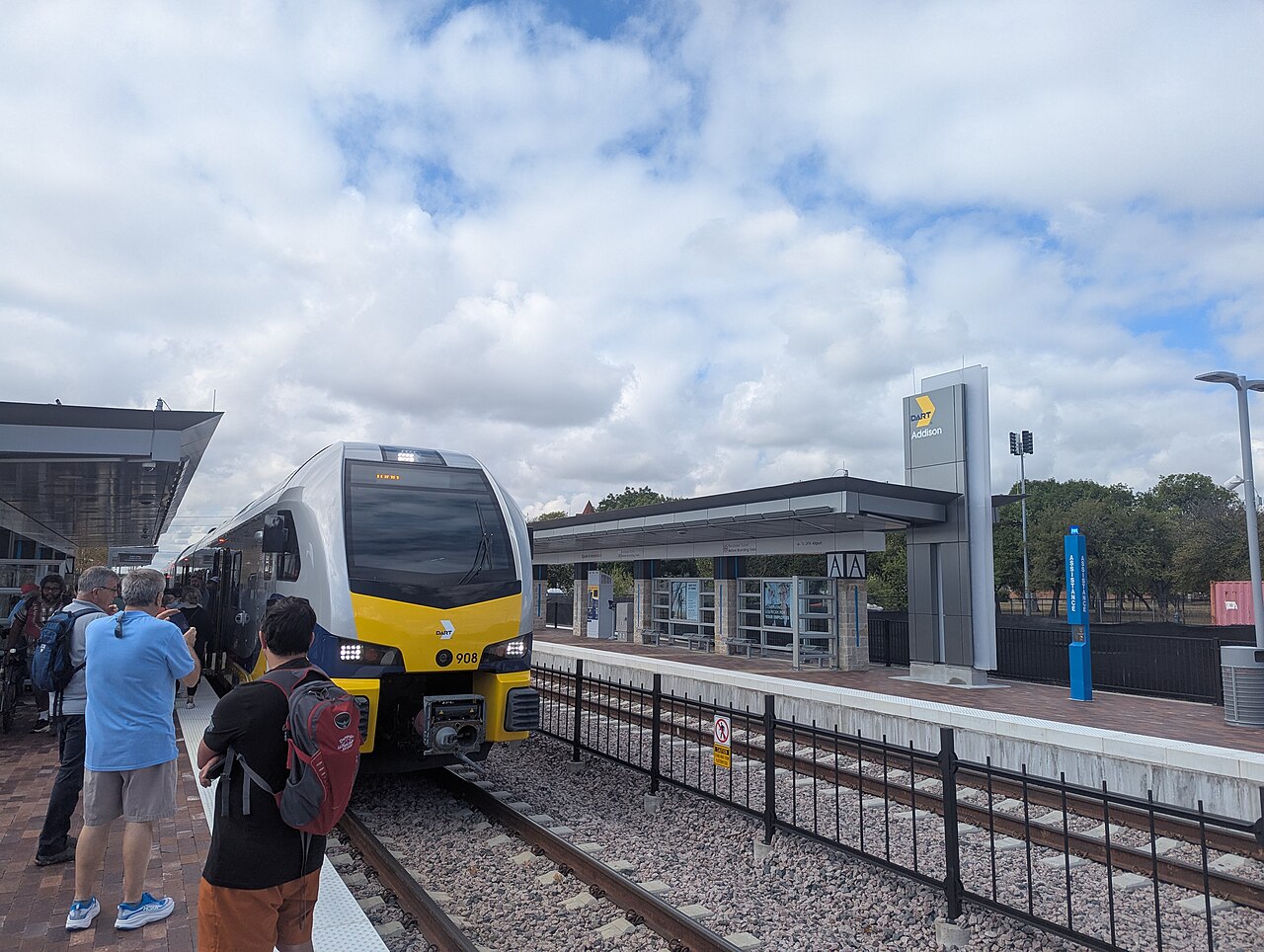
For decades, getting from Plano or Addison to DFW Airport meant a car, a toll road and a parking bill. Since last fall there’s been another way. DART’s Silver Line, the 26-mile regional rail route that opened October 25, 2025, now runs from Shiloh Road in east Plano all the way to a platform steps from DFW’s Terminal B.
If you haven’t tried it yet, here’s the practical rundown: where it stops, how often it comes, what it costs in 2026, and the handful of things worth knowing before you roll a suitcase onto the platform.
Where the Silver Line actually goes
The line crosses seven cities: Plano, Richardson, Dallas, Addison, Carrollton, Coppell and Grapevine, ending at DFW International Airport. Per DART’s launch announcement, there are 10 stations. From east to west: Shiloh Road and 12th Street in Plano, UT Dallas, CityLine/Bush in Richardson, Knoll Trail in far North Dallas, Addison Transit Center, Downtown Carrollton, Cypress Waters, DFW Airport North and DFW Airport Terminal B.
A few of these are genuinely useful transfer points. CityLine/Bush connects to the Red Line, Downtown Carrollton to the Green Line, and Terminal B sits alongside Trinity Metro’s TEXRail platform, which continues to Grapevine and downtown Fort Worth. The official Silver Line page has station maps and schedules for each stop.
How often trains run
This is commuter rail, not light rail, so don’t expect a train every few minutes. DART’s published service plan calls for trains every 30 minutes during weekday peak hours and every 60 minutes off-peak and on weekends, with service running from 4 a.m. to 1 a.m. daily. That early start and late finish were built with airport workers and early flights in mind.
The trains themselves are Stadler-built and feel more like intercity coaches than the familiar light rail cars: overhead luggage racks, bicycle racks, USB chargers at the seats and level boarding for wheelchairs and strollers.
What a ride costs in 2026
Silver Line trips use regular DART fares. For travel anywhere on DART’s own system, including the full Silver Line, a local Day Pass runs $6 and a 3-Hour Pass runs $3, with reduced-fare riders paying half. The 3-Hour Pass covers transfers, so a Plano-to-airport trip with a Red Line connection is still one $3 fare if you make it within the window.
If your trip continues past DFW onto TEXRail or another regional service, you need a Regional Day Pass instead. That got cheaper this spring: DART cut the Regional Day Pass from $12 to $9 on March 1, 2026, a 25 percent drop, while local fares stayed put.
Seniors 65 and older, Medicare cardholders, riders with disabilities, veterans and students qualify for reduced fares, which takes the Day Pass to $3. You’ll want a Discount GoPass Tap card or other reduced-fare credential set up before you ride. Buy any of these fares in the GoPass app, at station ticket machines, or by tapping a contactless credit card at the platform readers.
Using it for a flight
The airport stop is the real headline. Terminal B station puts you at the terminal itself, and DFW’s free Terminal Link shuttle or Skylink (inside security) covers the rest of the airport. Coming home, follow the ground transportation signs at Terminal B to find the platform.
Two honest caveats. First, at 30 to 60 minute frequencies, check the schedule before you leave rather than showing up and hoping; a just-missed train is a long wait with luggage. Second, build in transfer time if you’re connecting from the Red, Green, Orange or Blue lines, since those connections aren’t timed to the minute.
Small print worth knowing
A couple of details save money and confusion. If you ride more than occasionally, register a GoPass Tap card or the contactless card you tap with; registered cards get fare capping, which means the system automatically stops charging you once your taps add up to the best available pass for the day. Paying as you go never costs more than the Day Pass would have.
And if the route seems oddly familiar, it should. The Silver Line runs on the old Cotton Belt freight corridor, a right of way DART spent decades planning around before trains finally carried passengers on it. That history explains the route’s best trick: it runs east to west across the northern suburbs, a direction the rest of the rail system, which funnels everything through downtown Dallas, never served.
Who this actually helps
Beyond air travelers, the Silver Line quietly stitches together job and school trips that used to be miserable without a car: UT Dallas students coming from Carrollton, Addison office workers living near CityLine, airport-area employees starting shifts before dawn. It also links to the region’s trail network, so bikes on board are normal, not an exception.
If you’ve been meaning to test it, a $3 fare and a free Saturday are all it takes. Plan your trip at DART’s trip planner, or call DART customer service at 214-979-1111 if you’d rather talk to a person about the route.
This article was produced with AI assistance and reviewed by a human editor. Figures are linked to their primary sources; where a claim could not be verified from the public record, we say so.

Leave a Reply