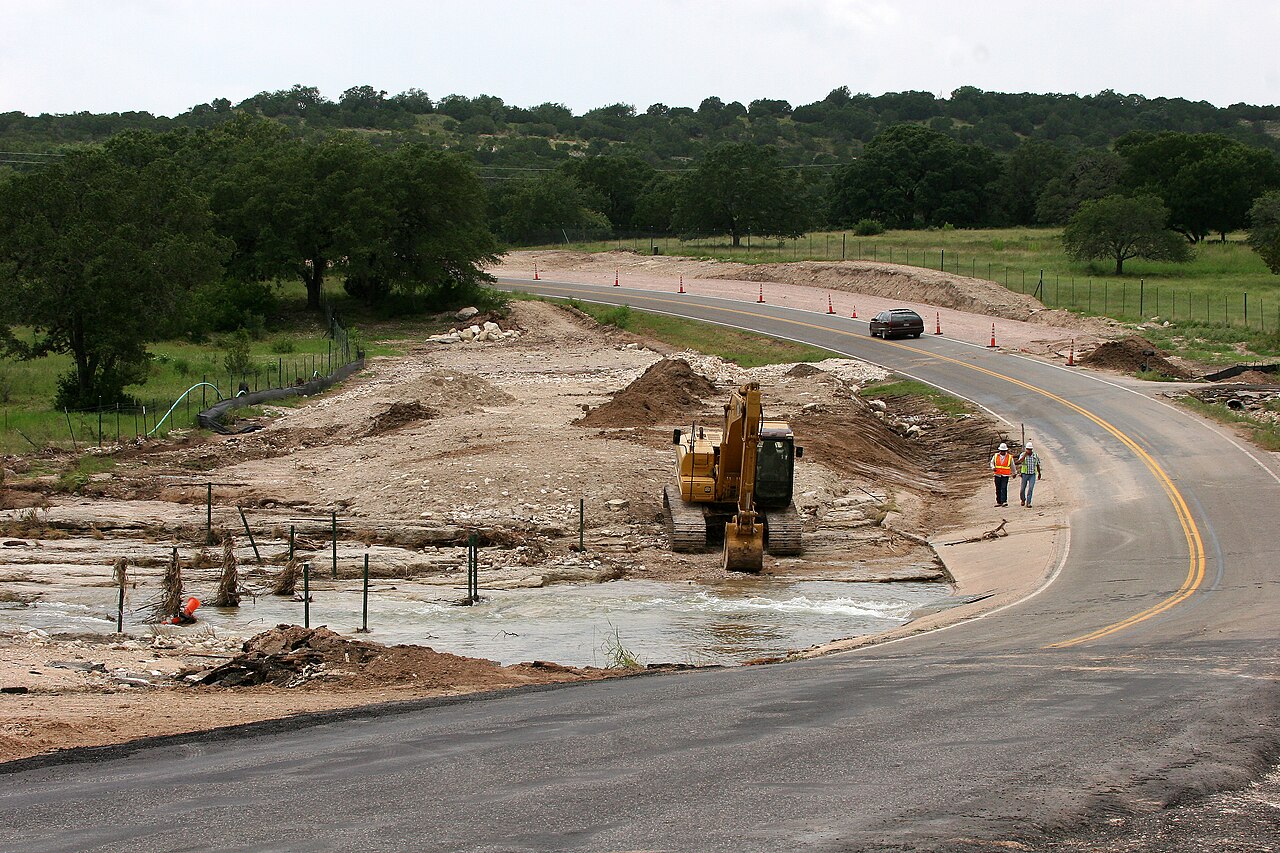
It is a spring night in North Texas. The storm has mostly passed, the radar is quieting down, and you are five minutes from home when the headlights catch it: a sheet of brown water sliding across the road where the pavement dips toward the creek. It does not look deep. The car in front of you is idling at the edge, deciding.
That moment, right there, is where most flood deaths happen. Not in dramatic river rescues, but in ordinary vehicles at ordinary crossings, driven by people who decided the water did not look that bad. The National Weather Service has spent two decades hammering four words for exactly this moment, and they are the closest thing DFW has to a flood commandment: Turn Around, Don’t Drown.
The numbers behind the slogan
The Weather Service’s Turn Around Don’t Drown campaign page lays out why flooding gets its own slogan. Each year, flooding kills more people than any other thunderstorm-related hazard, more than lightning, more than tornadoes. And the Centers for Disease Control and Prevention, cited on that same NWS page, reports that over half of all flood-related drownings happen when a vehicle is driven into hazardous floodwater. The next largest share is people walking into or near it.
The physics are meaner than they look. Per the NWS, six inches of fast-moving water can knock an adult off their feet. Twelve inches, about the height of a ruler, is enough to carry away most cars. Two feet of rushing water can take an SUV or a pickup. The math never favors the vehicle, because water does not have to be deep to be powerful; it has to be moving.
Why cars are the trap
A car feels like protection. It is two tons of steel, it is dry inside, and it has carried you through every storm of your life. But a vehicle floats sooner than intuition says it should, and once the tires lose contact with the pavement, you are a passenger in a boat with no rudder, headed wherever the current goes. Many of the deaths the NWS counts are people swept downstream in exactly this way.
There is a second trap hiding under the surface: you cannot see the road. Floodwater at night looks like a puddle with your headlights on it. What it may actually be covering is a washed-out lane, a missing culvert, or no road at all. The NWS warning is specific on this point: never drive around barriers blocking a flooded road, because the road may have collapsed under that water. The barricade is not a suggestion about your driving skill. It is often the only visible evidence that the pavement is gone.
DFW’s low-water crossing problem
North Texas is creek country. The Trinity’s forks and their dozens of tributaries thread through nearly every city in the metro, and the region’s flat terrain and clay soil mean heavy rain runs off fast instead of soaking in. Streets that cross those creeks at grade, the classic low-water crossings, can go from damp to dangerous in minutes during the kind of training spring storms this area sees every May.
Flash flooding here is not a rural phenomenon. Underpasses, service roads and neighborhood streets flood in the middle of the metro, and it happens most often at night, when depth is hardest to judge. When NWS Fort Worth issues a flash flood warning for your county, the roads you drive every day are the hazard it is talking about. Those warnings push automatically to phones as Wireless Emergency Alerts, which is one more reason not to silence them.
What to do when you meet water
The rule is the slogan, applied literally. If water covers the road, turn around and find another route, even if it costs ten minutes, even if the truck ahead of you made it, even if you have driven that crossing a thousand dry days. Trucks sit higher and weigh more, and plenty of them end up in the creek anyway.
If you are on foot, the same discipline applies at six inches instead of twelve. Do not let kids play in or near flooded creeks or drainage channels; moving water and slick banks are a bad combination, and storm runoff carries debris you cannot see.
And if the worst happens and your vehicle is caught in rising water: get out and get to higher ground if you can do so safely. The car is replaceable.
Make the habit boring
The Weather Service pushes Turn Around Don’t Drown so hard because the fix is genuinely free. No kit to buy, no app to install, just a decision made in advance so you do not have to make it at 11 p.m. staring at brown water. The yellow warning signs you see at crossings around the region are the permanent version of that decision, posted where flooding is frequent and fast.
This is the season for it. May is historically the heart of severe weather in North Texas, and every big rain event puts water over some road in the metro. When it is yours, you already know the move. Turn around.
This article was produced with AI assistance and reviewed by a human editor. Figures are linked to their primary sources; where a claim could not be verified from the public record, we say so.

Leave a Reply