Sometime this summer, probably on a 103-degree afternoon, a notice from ERCOT will start making the rounds in North Texas: please conserve electricity this evening. If you lived through February 2021, that kind of message can put a knot in your stomach. Most of the time, though, a conservation request is not a warning that the lights are about to go out. It is the grid operator asking for a little help before things get anywhere near that point.
Here is what each of ERCOT’s notices actually means, why the request almost always lands in the early evening, and which household changes genuinely move the needle. None of it requires suffering through a hot house.
Three levels, from heads-up to real request
Since 2023, ERCOT has used a public notification system called the Texas Advisory and Notification System, or TXANS, to flag stretches of high demand before they arrive. It has three levels, and the differences matter.
A Weather Watch is the mildest. ERCOT issues it roughly three to five days ahead of forecasted extreme weather and high demand. Grid conditions are normal when a Weather Watch is out. Nothing is asked of you except to pay attention. Treat it the way you treat a heat advisory: useful information, not an alarm.
A Voluntary Conservation Notice is the middle step. Demand is forecast to run high against a lower supply, and ERCOT asks Texans to voluntarily trim their use during a specific window, if it is safe to do so. State, city and county offices get the same request for their own buildings.
A Conservation Appeal is the serious one. ERCOT issues it when there is a potential to enter emergency operations because reserves are running low. It is still voluntary, and it is still not an outage announcement. But it means the cushion between supply and demand is getting thin enough that shaving demand genuinely helps operators keep the system in balance while they line up every available tool on the supply side.
If conditions worsen past that, ERCOT moves into formal Energy Emergency Alert levels, which unlock additional reserves and, only at the last stage, controlled outages. Conservation notices exist precisely to keep the grid from getting there.
Why the pinch lands in the early evening
Summer conservation windows almost always cover the late afternoon and early evening, and there is a simple reason. Air conditioners across Texas are still working flat out at 7 p.m., but the solar farms that now supply a big slice of afternoon power fade as the sun drops. Demand stays high while a chunk of supply walks off the job. The squeeze usually lands somewhere in the 6-to-9 p.m. range; during the September 2023 emergency, for example, ERCOT’s appeal ran until 9 p.m., when demand had eased enough to stand down.
Winter flips the clock. Cold-weather demand peaks in the dark early morning, when heaters run hardest before sunrise. ERCOT’s January 2024 conservation request covered 6 a.m. to 10 a.m., and this past January, during the late-month freeze, the grid operated under federal Department of Energy emergency orders for two days. So when you see a conservation window, the hours are not arbitrary. They are the grid’s rush hour for that season.
What actually moves demand at your house
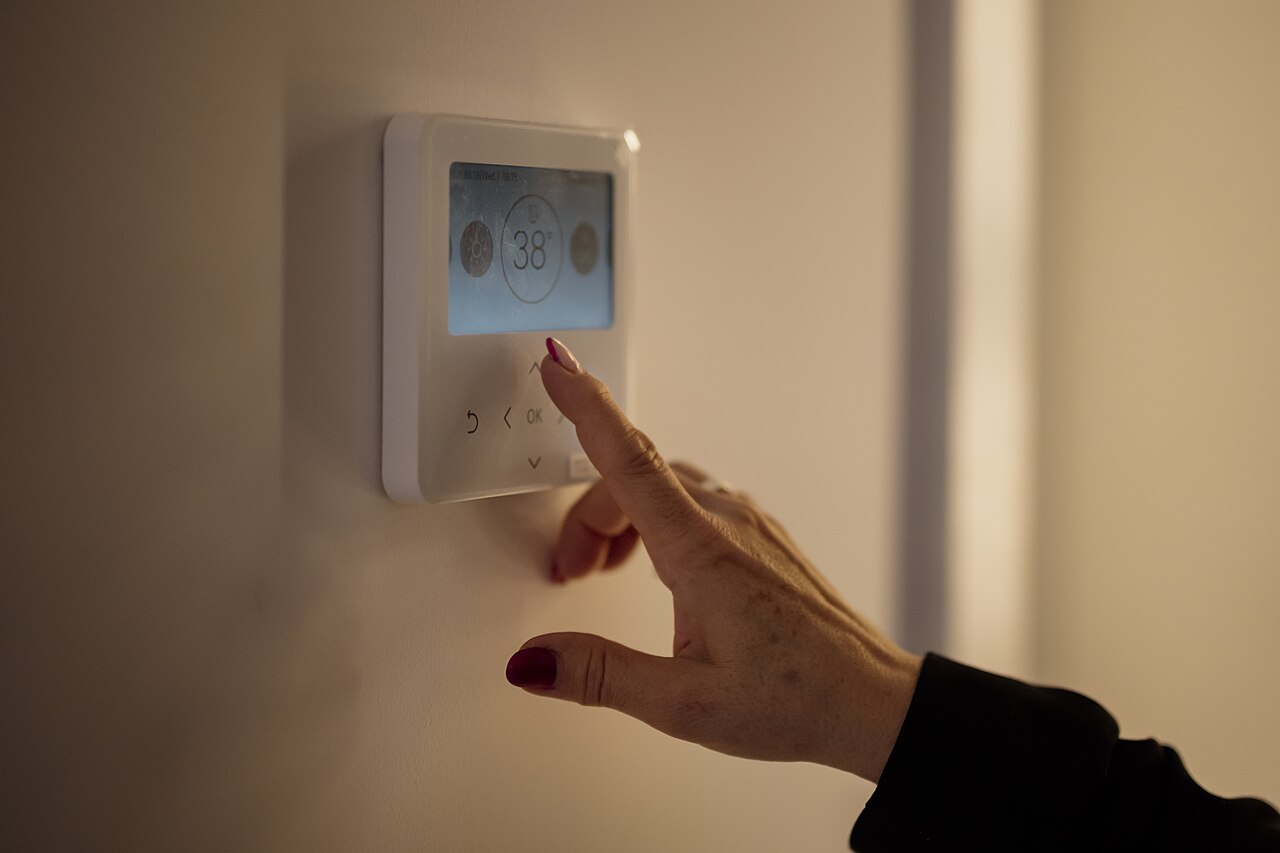
Air conditioning dominates a North Texas summer bill, so it dominates the conservation math too. ERCOT’s own guidance is modest: raise the thermostat a degree or two during the window, if it is safe for your household. You do not need to shut the system off, and you should not.
The other big levers, straight from ERCOT’s energy-saving tips on the TXANS page: hold off on the washer, dryer, dishwasher and oven until after the window closes; set the pool pump to run overnight or early morning and shut it off during peak hours; and turn off lights and electronics you are not using. A load of laundry at 9:30 p.m. instead of 6:30 p.m. costs you nothing but genuinely shifts demand.
Two things that do not help: panic-charging every device at 5 p.m. right before the window, and running the AC extra cold in the afternoon to “stock up.” Pre-cooling by a degree or two before the window can be reasonable; deep-freezing the house just adds to the afternoon peak.
If someone in your home depends on powered medical equipment
A conservation appeal is only a request, and ERCOT says so plainly: if you have medical needs, do not compromise them to conserve. The practical step is to contact your electric utility, which in most of DFW means Oncor for the wires regardless of who sends your bill, and ask about the chronic-condition or critical-care registry, and keep a backup plan in case controlled outages are ever needed later. That guidance comes straight from ERCOT’s own conservation page.
How to hear about it before your group chat does
ERCOT publishes these notices itself, so you do not have to wait for a screenshot to reach you. You can sign up for TXANS email notifications, download the ERCOT app, or simply check the supply-and-demand dashboard, which shows the forecast cushion for the next six days in one graph. When a neighbor forwards something scary, thirty seconds on that dashboard will tell you whether it is a routine watch or a genuine appeal.
The short version for your fridge door: Weather Watch means pay attention. Voluntary Conservation Notice means trim what is easy. Conservation Appeal means the evening cushion is thin, so bump the thermostat two degrees, hold the laundry until bedtime, and check the dashboard rather than the rumor mill.
This article was produced with AI assistance and reviewed by a human editor. Figures are linked to their primary sources; where a claim could not be verified from the public record, we say so.

Leave a Reply