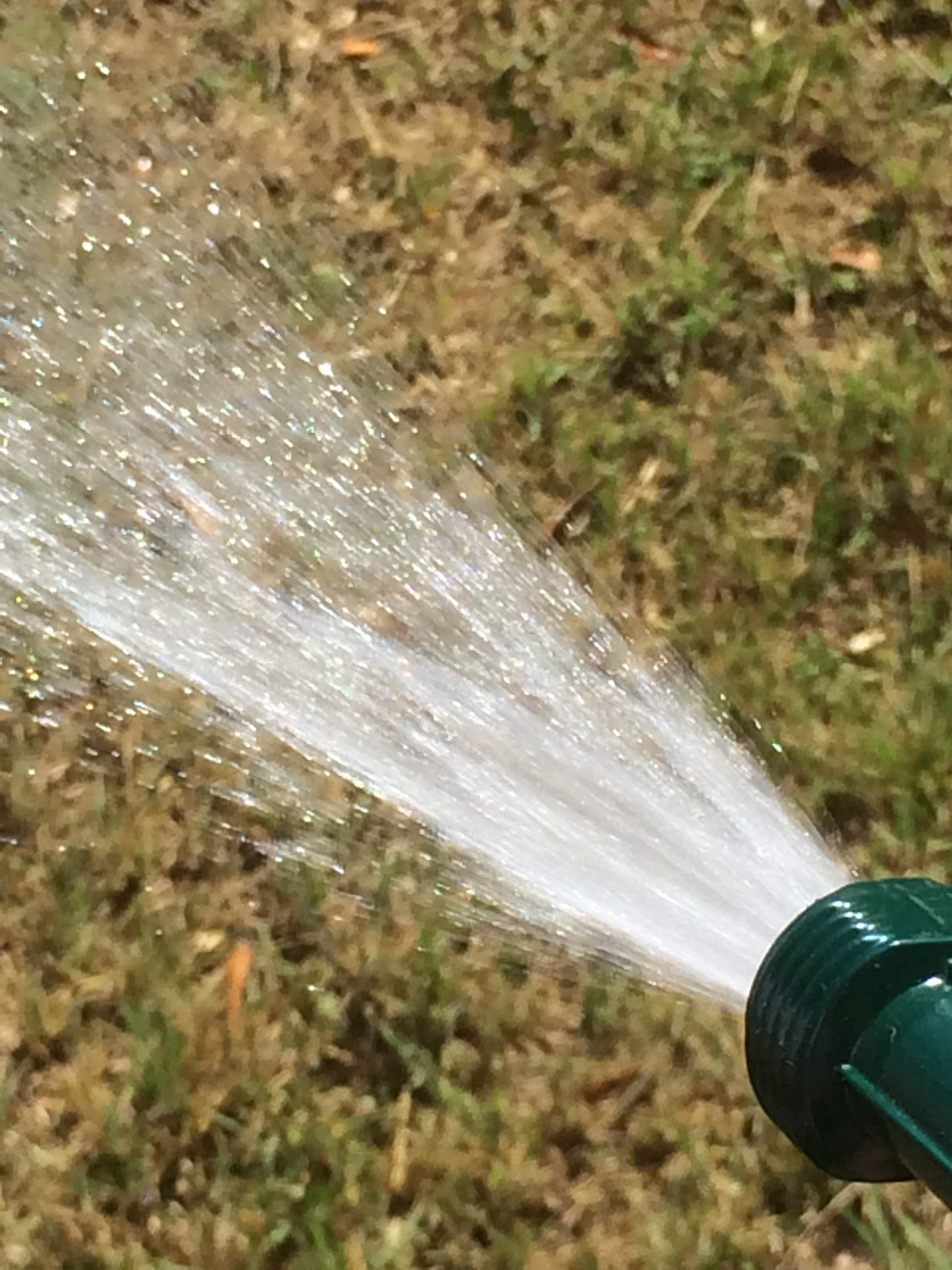
It happens every year about now: the June heat settles in, the St. Augustine starts looking thirsty at 2 in the afternoon, and somebody on your street cranks the sprinklers to fight back, midday, midweek. That neighbor is breaking city law in both of the metro’s big cities, and in Dallas the ticket for it can eventually run to four figures.
Neither Dallas nor Fort Worth is in drought emergency mode. These are the ordinary, permanent conservation rules both cities enforce every summer, and they are easy to follow once you know your two days. Here is the full picture: the schedules, the exceptions, and what enforcement actually looks like.
Dallas: two assigned days, and never from 10 to 6
Dallas Water Utilities’ conservation ordinance limits sprinkler and hose-end watering to a maximum of twice per week, on days assigned by your street address. Even-numbered addresses water on Sundays and Thursdays; odd-numbered addresses water on Saturdays and Wednesdays. Nobody waters on Mondays, Tuesdays or Fridays. Properties with multiple addresses, like apartment complexes, go by the lowest address number.
Layered on top of the day rule is a time-of-day rule: from April 1 through October 31, watering is prohibited between 10 a.m. and 6 p.m., even on your assigned days, per the city’s conservation FAQ. The logic is evaporation; midday water in a North Texas summer partly disappears before it reaches the roots. Early morning on your assigned day is the sweet spot, and your grass genuinely prefers it.
The ordinance carries a few less-famous requirements worth knowing if you own an automatic system: rain and freeze sensors are mandatory, watering during any form of precipitation is prohibited, and letting your sprinklers spray driveways and sidewalks or send runoff down the gutter is a violation on its own, broken heads included.
Fort Worth: same idea, different days
Fort Worth’s rules are year-round rather than seasonal, and the city publishes them on its twice-per-week watering page. No sprinkler or irrigation system use between 10 a.m. and 6 p.m., any day, any month. Residential addresses ending in an even number water Wednesdays and Saturdays; odd-enders water Thursdays and Sundays. Non-residential properties, meaning businesses, apartment complexes and parks, take Tuesdays and Fridays. Monday is a rest day for the whole system. Fort Worth also tells residents not to water during rain or when rain is expected, and not to water hard surfaces.
Notice the trap for people who move between the cities, or who maintain a rental in one and live in the other: the even and odd days do not match. An even-numbered address waters Sunday and Thursday in Dallas but Wednesday and Saturday in Fort Worth. When in doubt, check the city the water bill comes from.
The exceptions that keep gardens alive
Both cities carve out the efficient methods entirely. Hand watering with a hose, soaker hoses and drip irrigation are allowed any day and any time in Dallas and Fort Worth alike. That means your tomatoes, new shrubs and foundation plantings are never hostage to the schedule; only sprinklers are. Dallas explicitly blesses daily drip or hand watering for vegetable gardens.
Dallas also runs a formal variance system for situations the schedule genuinely does not fit. New sod or seed can get a temporary variance to water more often while it establishes, with proof of purchase; very large properties and golf courses can apply too. Details and forms are on the Save Dallas Water variance page, or by phone for those offline. And if you irrigate with well water, rainwater or other non-potable sources, the schedule does not apply to you, though permanently installed alternate systems need a permit and a small purple sign saying so.
What a violation actually costs
Dallas spells out its enforcement plainly: violations of the outdoor watering rules can bring fines of $250 to $2,000 per incident, with a warning issued for a first offense. Reports come in mostly from neighbors, through 311 or the city’s online form, with the address, date and time. Fort Worth enforces its ordinance through its code and water conservation staff on the same basic pattern, education and warnings first, citations for repeat offenders, and the city takes reports through its water conservation office.
In practice, both cities would rather fix your controller than fine you. Dallas offers free irrigation system evaluations by licensed irrigators who will find leaks and set an efficient schedule at no charge, and Fort Worth’s conservation staff field questions by phone and email.
The part your lawn already knows
The twice-a-week limit sounds punitive in late June and is actually horticulture. Dallas’s own guidance notes that established lawns need roughly an inch of water every five to ten days even in summer heat, and that deep, infrequent watering grows deeper roots that ride out heat, freezes and future droughts far better than daily sprinkling does. Drooping grass at 4 p.m. in July is usually heat stress, not thirst; check it in the morning before you add a watering. Set the system for your two assigned mornings, keep a soaker hose on the beds, and the schedule stops being a restriction and starts being the recipe.
This article was produced with AI assistance and reviewed by a human editor. Figures are linked to their primary sources; where a claim could not be verified from the public record, we say so.

Leave a Reply