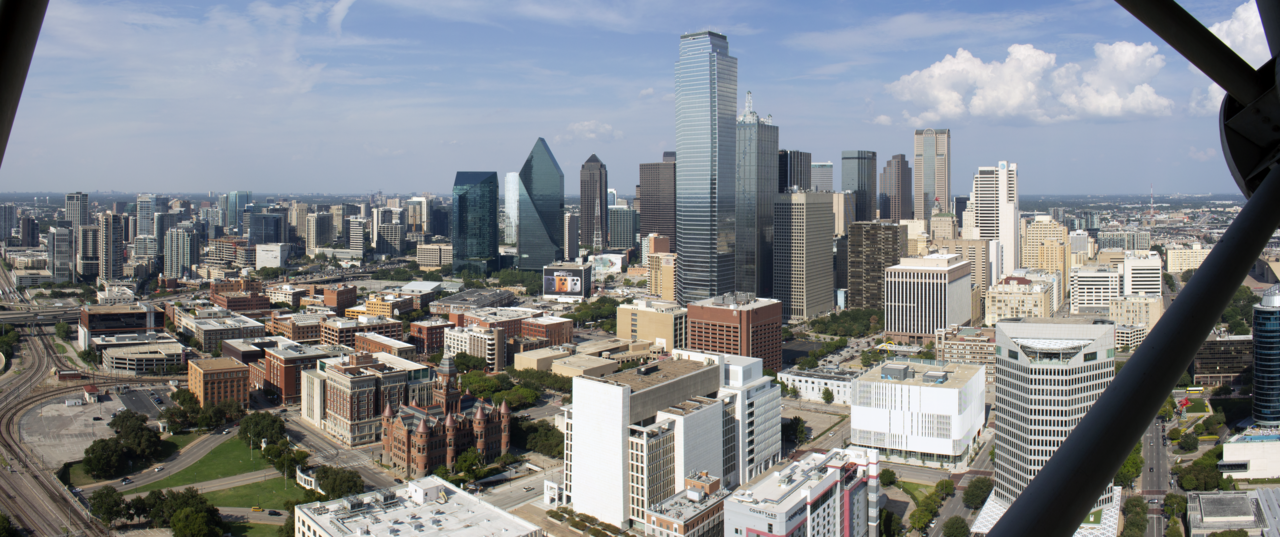
It’s July in North Texas: the forecast says triple digits, the air over LBJ looks faintly brown by mid-afternoon, and somewhere between the weather and the traffic, the radio mentions today is an “Ozone Action Day.” Most of us nod along without knowing what, exactly, we’ve been asked to do, or whether any of it matters.
It does, more than you’d think, and the asks are smaller than you’d fear. Here’s what an Ozone Action Day actually is, why DFW gets so many of them, who needs to take the health side seriously, and which changes to an ordinary driving day genuinely move the needle.
What an Ozone Action Day actually is
During ozone season, the Texas Commission on Environmental Quality issues a daily air quality forecast for the state’s big metro areas, Dallas-Fort Worth included. When forecasters see conditions favorable for high ozone the next day (heat, sunshine, stagnant air), TCEQ declares an Ozone Action Day, typically a day in advance, so residents and businesses can trim the pollution that feeds it. You can get the alerts sent straight to your inbox through TCEQ’s free email subscription.
The key thing to understand: ground-level ozone isn’t smoke and it isn’t emitted by anything directly. It’s cooked. Tailpipe and industrial emissions (nitrogen oxides and volatile organic compounds) react in sunlight and heat to form ozone, which is why the worst readings land on hot, still, sunny afternoons. A July day that’s miserable for people is ideal for ozone chemistry.
Why DFW specifically, and why it’s a legal problem, not just a health one
Dallas-Fort Worth has struggled with ozone for decades. Ten North Texas counties currently sit in “nonattainment” of the federal ozone standard, according to the EPA, meaning the region as a whole doesn’t meet the health-based limit and is under federal obligation to get there. The North Central Texas Council of Governments tracks the region’s numbers all season on its ozone activity page, following what’s called the design value, the running statistic the EPA uses to judge whether the region is improving.
Ozone season here is long: NCTCOG tracks it from March 1 through November 30. But the heart of it is exactly now: the stretch of full-sun, 100-degree afternoons between late June and early September, when a bad week can set back the whole region’s numbers. Falling short isn’t abstract, either; continued nonattainment carries the threat of federal sanctions and tighter controls on the region.
Who should treat the alert as a health warning
Before the driving tips, the health piece. Ozone is a lung irritant, and on Action Days the people who feel it first are children, older adults, anyone with asthma or other lung conditions, and people working or exercising hard outdoors. The practical response is timing, not house arrest: ozone builds through the afternoon and typically peaks in the late afternoon and early evening, so morning is the window for the run, the yard work and the kids’ practice. If you’re in a sensitive group, keep the strenuous stuff out of the 3-to-7 p.m. furnace on alert days.
What they’re asking drivers to change
Vehicles are one of the region’s biggest ozone-ingredient sources, which is why the requests aim at how and when we drive. The regional Air North Texas campaign, run by NCTCOG with local governments across DFW, keeps a full list of clean air actions for individuals. The ones that do the most work on an Action Day:
Combine your errands into one trip. A cold engine pollutes far more than a warm one, so five short hops emit more than one efficient loop. Skip the idling. The drive-through line and the parked-with-the-AC-running wait both pour out exhaust for zero miles; park and go inside, or shut the engine off. Refuel after the sun goes down. Gasoline vapors escaping at the pump are exactly the VOCs that cook into ozone. Evening fueling gives them no afternoon sun to cook in. Top the tank without overfilling, and make sure the cap clicks. Share or skip the drive. One carpool, one DART or Trinity Metro ride, or one work-from-home day removes a whole car from the afternoon mix. Push the mowing to evening, or to tomorrow. Gas mowers and trimmers are small engines with outsized emissions; if it can wait a day, let it.
None of these is a sacrifice. That’s the point of the program: on the handful of days the region’s air is on the edge, a few thousand households making penny-sized changes is what keeps a bad afternoon from becoming a violation.
How to keep score at home
Two bookmarks cover it. TCEQ’s forecast page tells you whether tomorrow is an Action Day, and the Air Quality Index color tells you how careful to be: green and yellow are fine for everyone, orange means sensitive groups should ease off, red means everyone should. And if you’d rather not check at all, the email alert does the remembering for you.
DFW’s air is genuinely better than it was twenty years ago. The region has been grinding its ozone numbers down for two decades. The alerts are how it stays on that path through the hottest months. When the next one lands, you’ll know exactly what it’s asking: drive a little less, a little smarter, a little later. That’s the whole assignment.
This article was produced with AI assistance and reviewed by a human editor. Figures are linked to their primary sources; where a claim could not be verified from the public record, we say so.

Leave a Reply