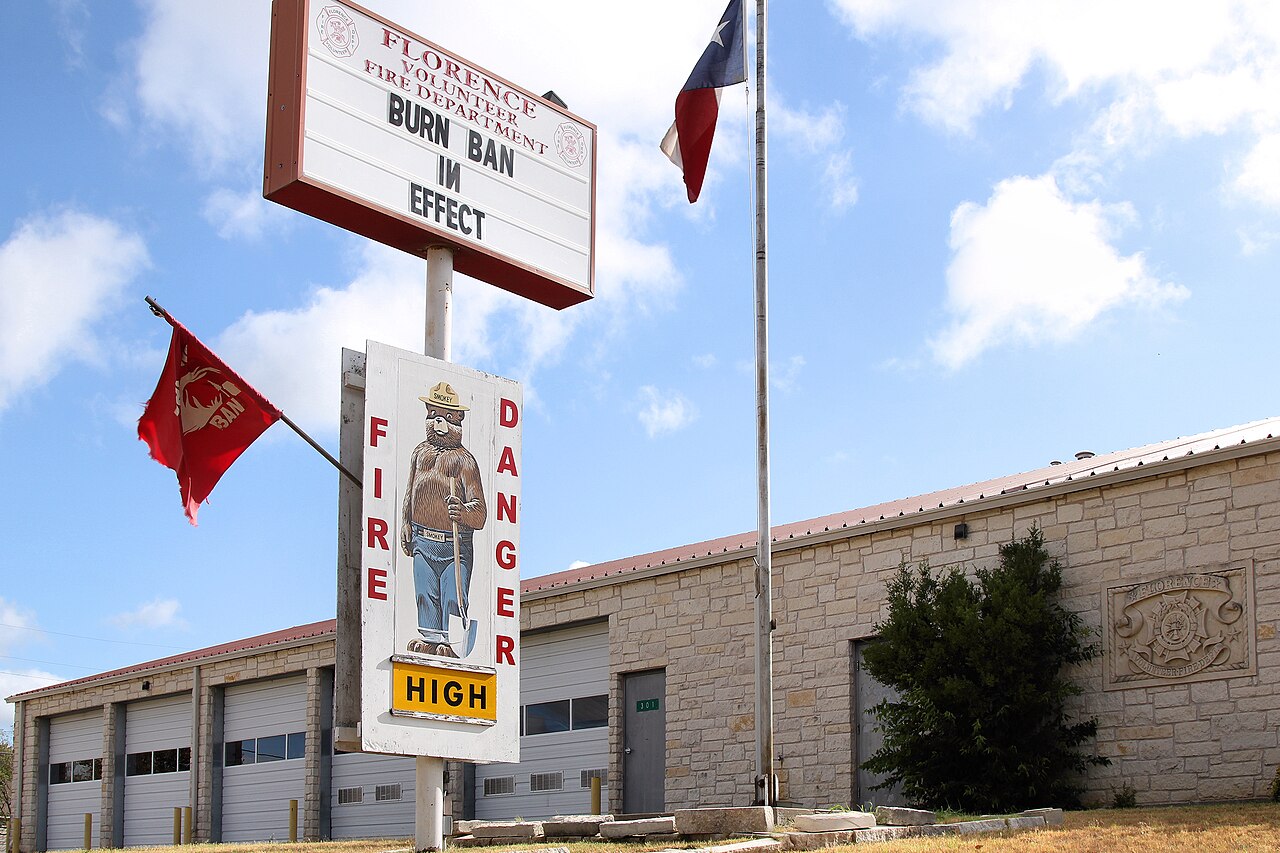
Drive far enough out of the metroplex in a dry stretch, past Weatherford or up toward Decatur, and you will see them planted by volunteer fire stations: signs reading BURN BAN IN EFFECT. For anyone with acreage in Parker, Wise, Kaufman or the rural edges of Denton and Ellis counties, that sign changes weekend plans. No brush pile, no burn barrel, and questions about everything from the fire pit to the charcoal grill.
Burn bans are one of the most local laws in Texas. They are declared county by county, they switch on and off with the weather, and the details differ from one courthouse to the next. Here is who actually declares them, the drought math behind them, what they typically prohibit and exempt, and where to check your county’s status before you strike a match.
Who declares a burn ban
The authority comes from Section 352.081 of the Texas Local Government Code. It lets a county commissioners court prohibit or restrict outdoor burning when drought conditions exist, or when circumstances in the county make outdoor fires a public safety hazard. Each order runs for a limited period, no more than 90 days at a time, though a court can adopt a new order if conditions have not improved. Between meetings, the county judge can put a ban in place so a county is not left waiting for the next commissioners court session while pastures cure into kindling.
Note the word county. A ban’s real teeth apply to unincorporated areas, the land outside city limits. Inside Dallas, Fort Worth and most metroplex suburbs, open burning of brush and trash is already generally prohibited year-round by city fire codes, drought or no drought, which is why city dwellers mostly hear about burn bans on the news rather than living under them.
The drought index that drives the decision
The statute does not leave “drought” to a commissioner’s gut. It points to determinations by the Texas A&M Forest Service, built on the Keetch-Byram Drought Index, a scale that estimates how much moisture the soil has lost. The index runs from 0, meaning saturated ground, to 800, meaning the top layers of soil are essentially bone dry. As the number climbs, dead grass and brush ignite more easily and fire spreads faster. When a county asks, the Forest Service will determine whether drought conditions exist there, and commissioners courts also weigh local input from fire departments, the National Weather Service and county fire marshals.
That is why bans pop up in clusters after a few rainless weeks and disappear after a soaking spring storm system moves through. The index responds to real rainfall, not the calendar.
What a ban prohibits, and what it usually does not
The core of every ban is the same: no outdoor burning in the unincorporated county. That means no burning brush piles, leaves or household trash, no burn barrels, and no setting fire to a field or ditch line. Violating a county burn ban order is a Class C misdemeanor under the statute, punishable by a fine of up to $500, and if your fire escapes and damages a neighbor’s property, the criminal fine can be the least of your problems.
Most orders carve out exemptions that track the statute: firefighter training, certain public utility, natural gas and mining operations, burning connected to planting or harvesting agricultural crops, and burns conducted under the supervision of a certified prescribed burn manager. Many counties also expressly allow outdoor cooking in enclosed grills and smokers even during a ban, but that detail varies, and some orders tighten up on charcoal and open-flame cooking when conditions get severe. The county’s actual order controls, so read it rather than assuming.
Where to check your county’s status
The Texas A&M Forest Service keeps a statewide burn ban map and list, updated as counties report their orders, and it is the fastest single place to check any county in Texas. For the fine print, go to the county itself: commissioners court orders are posted on county websites, and the county fire marshal’s office can answer questions about what a specific order allows. If you live near a county line, check both counties, because it is entirely possible to have a ban on one side of the road and not the other.
It is also worth watching the National Weather Service in Fort Worth on windy, dry days. A red flag warning means fire weather is dangerous right now, and on those days even legal burning is a bad idea.
The common-sense layer on top of the law
A burn ban is a floor, not a ceiling. Plenty of grass fires in North Texas start on days with no ban at all, from a chain dragging sparks on the highway, a mower blade striking rock, or a brush pile someone thought was out. If you do burn legally when no ban is in effect, the old rural rules still apply: clear the area down to dirt, keep water and a shovel at hand, never leave a fire unattended, and let your local volunteer fire department know if you are burning something sizable. The counties post the signs; keeping the fire on your own land is up to you.
This article was produced with AI assistance and reviewed by a human editor. Figures are linked to their primary sources; where a claim could not be verified from the public record, we say so.
Leave a Reply