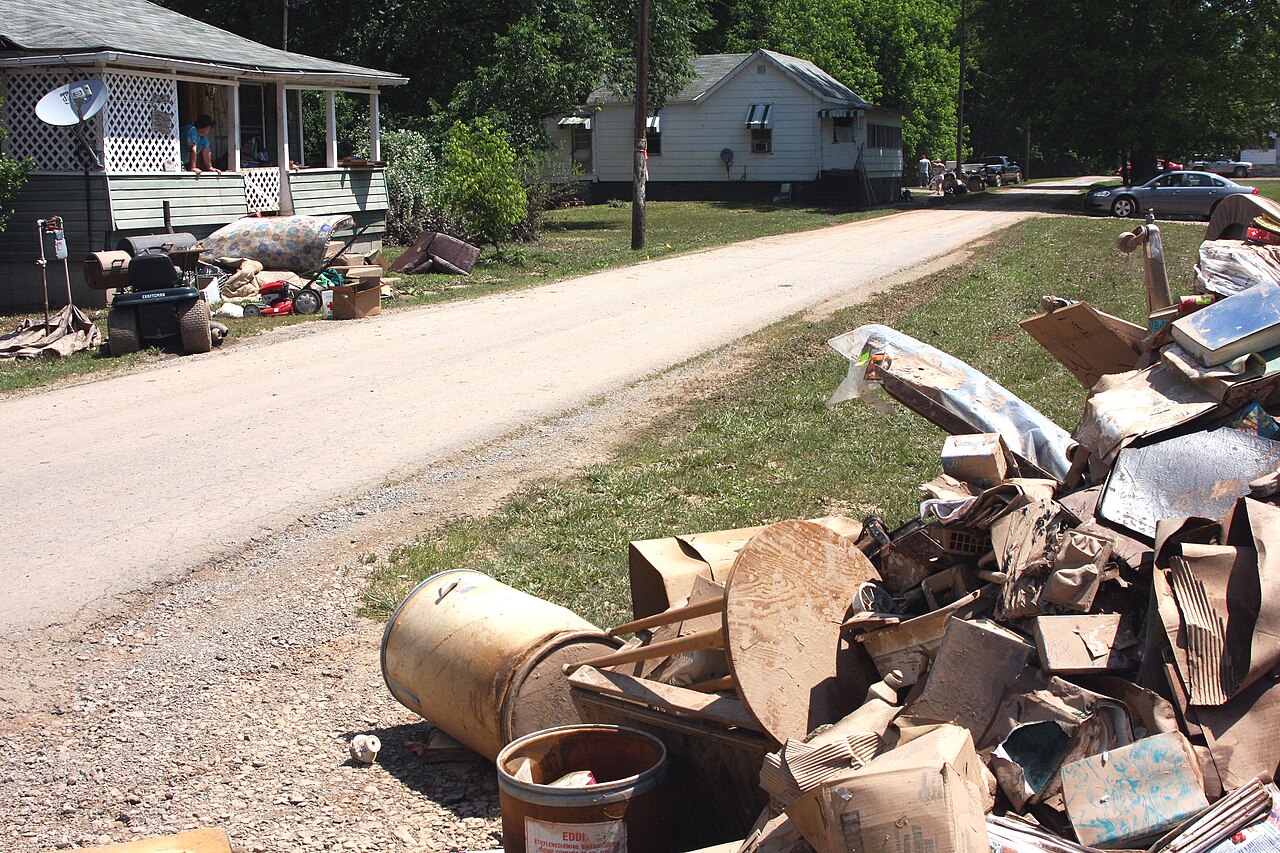
Every North Texas spring writes the same scene: a line of storms tears through after dark, and by morning half the live oaks in the neighborhood have shed limbs across driveways and fences. The chainsaws come out, the piles go up, and then everyone stands at the curb asking the same question. When does the city actually take this away?
If you live in Dallas and get city trash service, the answer runs through the Sanitation Department’s monthly brush and bulky item collection, with a special playbook the city pulls out when a storm is big enough. Here is how the system works, how to stack a pile crews will actually take, and what to do when your debris outruns the limits.
Your collection week is the backbone
Every Dallas address with residential service gets one brush and bulky collection week per month, up to 10 cubic yards per set-out. Storm limbs ride the same schedule: unless the city announces otherwise, your downed branches wait for your regular week. You can look up your week on the city’s collection calendar, and materials should go out between the Thursday and Sunday before it starts, not earlier. Early set-outs are a code violation that can draw a citation, which feels harsh until you have driven a block where the piles sit for three weeks.
Ten cubic yards is more than it sounds, roughly a pile 9 feet long by 5 feet wide and 6 feet high, and the city’s page includes a calculator if you want to measure yours. A serious storm can still bury that number fast.
Stack it so the claw can reach it
Dallas collects brush with automated grapple trucks, and the rules exist so the claw can physically grab your pile without wrecking anything nearby. The essentials:
Cut limbs down to size. Individual pieces can be up to 8 inches in diameter and 10 feet long. Bag grass clippings and leaves, and tie the bags.
Place the pile just behind the curb in front of your own home. Not in the street, not in the alley, not on the sidewalk, and not across the way on a neighbor’s frontage.
Keep 5 feet of clearance from roll carts, mailboxes, fences, water meters, parked cars, fire hydrants, poles and traffic signs, and stay out from under low limbs and power lines. Crews will skip anything they cannot reach safely with the equipment, and a skipped pile means an orange tag and another month of waiting.
Keep brush separate from bulky items. A clean vegetation pile moves faster than one mixed with a couch and a water heater, and during storm cleanups the city asks residents to keep storm brush unmixed so it can be routed properly.
When a storm outruns the limits
For a pile bigger than 10 cubic yards, you have a once-a-year card to play: every customer may request one oversize collection of up to 20 cubic yards per calendar year, submitted through 311, the Dallas 311 app or the city website during the week before your collection week. Past that, oversize set-outs are collected and billed at $60 per 5 cubic yards, so a monster pile can quietly become a utility-bill surprise.
After a truly damaging storm, the city has gone further. Following the windstorm of May 2024, Sanitation ran a dedicated storm debris operation: an initial pass across affected areas, then a second phase during regular collection weeks with the monthly allowance temporarily raised to 30 cubic yards, no charge. The lesson for the next big one is to watch the city’s announcements after the storm, via the city’s news hub and the Sanitation pages, because the limits and timing can change in your favor when damage is widespread.
Either way, the city asks storm-hit residents to file a storm brush-debris service request through Dallas 311 after setting debris out. Those requests are how Sanitation maps where the damage is and where to send the extra trucks.
What the trucks will not take
The storm exception does not turn brush week into anything-goes week. Crews will not take construction or demolition debris, fence sections with protruding nails, roofing shingles, concrete, dirt, tires, electronics or anything with coolant or fuel in it, such as refrigerators and lawn mowers. And if a contractor does the tree work, the contractor is responsible for hauling what they cut. That one surprises people every storm season: a tree service that leaves the limbs at your curb has left you holding a pile the city may bill you for.
The short version for the next storm
Cut limbs to 8 inches by 10 feet, stack them behind the curb with 5 feet of clearance, keep brush separate from junk, and wait for your regular week unless the city announces storm passes. Request the 20-yard exception if you need it, file a 311 report so the city sees your block, and make any tree contractor haul their own cuttings. The claw does the rest.
This article was produced with AI assistance and reviewed by a human editor. Figures are linked to their primary sources; where a claim could not be verified from the public record, we say so.

Leave a Reply